
RC of Amherst helps in Domincan Republic
Posted by Wendy Keen
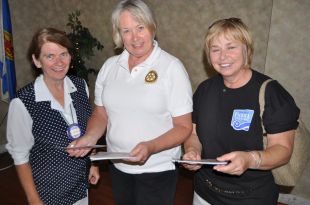 A group of Rotarians is helping make a difference in a small village in the
Dominican Republic. The Amherst Rotary Club provided $600 to the project last
year that helped provide food bags, school supplies and products for a men’s
shelter
A group of Rotarians is helping make a difference in a small village in the
Dominican Republic. The Amherst Rotary Club provided $600 to the project last
year that helped provide food bags, school supplies and products for a men’s
shelterAmherst Rotarians part of multi-club project to help Dominican village
AMHERST – At first glance $600 may not seem like much, but to the people of a tiny village in the Dominican Republic it makes all the difference.
Last year, the Amherst Rotary Club gave a group of Rotarians from Dartmouth heading to the Dominican a small amount of money and asked them to do what they could with it.
“It’s amazing what you can do with a little bit of money,” Rotarian and group member Wendy Keen told Amherst Rotarians on Monday. “A little bit goes a long way and it’s so appreciated. It brings hope to the communities there because it comes from away.”
All together, a half dozen Rotary Clubs provided thousands of dollars to support the project that has included the creation of a community garden and the collection and distribution of food bags and school supplies.
Keen said the money provided by the Amherst club went to purchase food bags that included basic staples such as rice while it also went to the purchase of school supplies and men’s products that are used to help the residents of a men’s shelter in the village.
Rotarians made two trips to Vasca earlier this year. The first group worked with Nutri-Lawn to compete the community garden that has been built over three years.
A second group went in February, taking with them hand tools from Vesey’s Seeds of Charlottetown along with more than 100 ballcaps – something that was very popular in the community.
Now that the garden has been complete and trees planted, Keen said, residents will begin cultivating their own food and selling it within the community.
Keen said the group is going back in early 2012 to build 16 latrines and a number of solar ovens. It also plans to help refurbish the school in the village and purchase a vehicle for community use.
“We’re looking at putting what are called Miracle toilets like they have in Haiti,” she said. “It separates the solids from the liquids and it’s composted with sugar cane debris that goes back into the ground to help with the garden.”
The solar ovens will go a long way toward promoting safe cooking in the village. In a lot of cases, Keen said, residents cook over open flames in their homes – a practice is dangerous and unhealthy with the smoke being inhaled from the cooking process.
Keen said the solar ovens use the suns rays to cook food. She believes the ovens could lead to a baking co-operative and help bring more economic sustainability to the village in the heart of the sugarcane industry.
dcole@amherstdaily.com